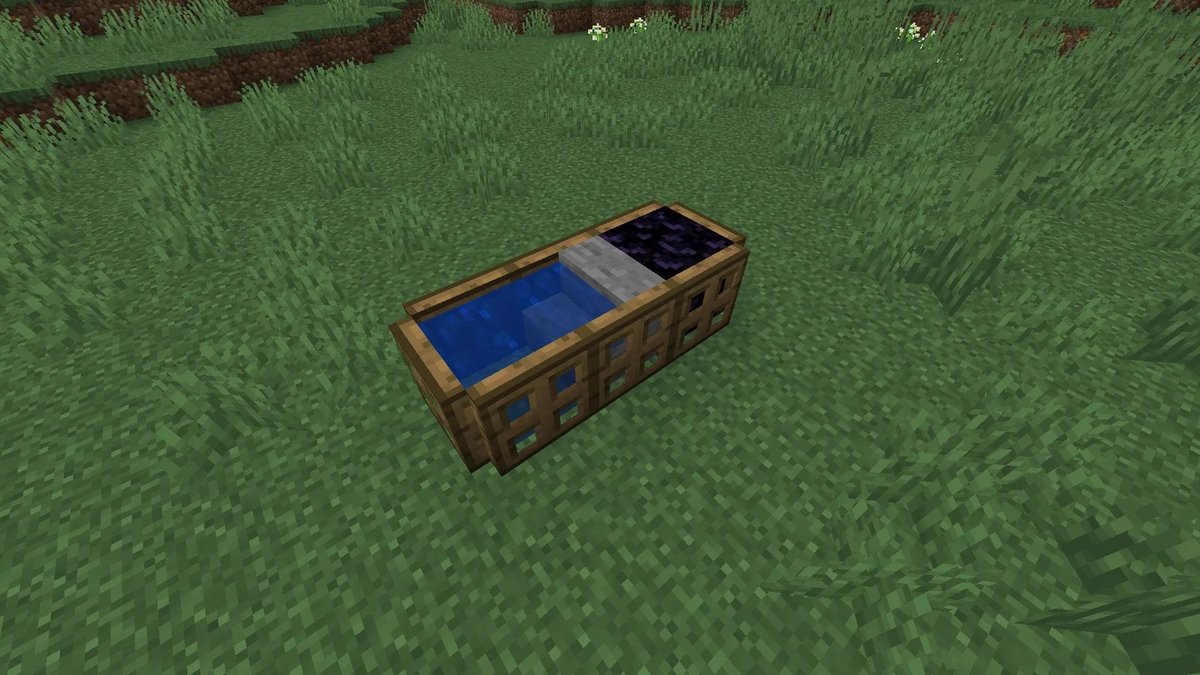
Obsidian is an indispensable resource in Minecraft, known for its extreme blast resistance and striking dark aesthetic. From crafting powerful enchantment tables to building secure bases and, of course, forging your gateways to the Nether, a steady supply of this tough block is crucial for any ambitious player. However, simply mining obsidian can be a painstaking process, even with the best tools, often taking well over a second per block. That’s why mastering the art of the Minecraft obsidian generator is a game-changer for long-term survival and ambitious builds.
This guide will take you from understanding obsidian's core properties to building your first simple generator, and even automating a high-volume factory. Get ready to unlock an infinite supply of one of Minecraft's most valuable blocks. Before we dive into generation, it's always good to Explore Obsidians properties and uses to fully appreciate why it's such a sought-after material.
Unearthing Obsidian: Where to Find It (Initially)
Before you can generate obsidian, you might encounter it naturally or in structures. Ruined portals, found in both the Overworld and the Nether, are fantastic initial sources, often yielding many blocks. You can also find obsidian in loot chests within villages, bastions, or even epic structures like woodland mansions and End ships.
Natural obsidian forms whenever water flows over a lava source block. This can happen deep underground, at the bottom of ravines, or even in ocean ravines where lava pools meet the sea. Don't forget that a newly generated Nether portal itself provides a minimum of 14 obsidian blocks, with potential for more if it generates mid-air. These are great starting points, but they're not renewable.
The Basics of Obsidian Generation: Lava Meets Water
The fundamental principle behind all obsidian generation is simple: when a water source block flows onto a lava source block, it converts the lava into obsidian. This core mechanic forms the basis of everything from manual collection to automated factories. Your primary tool for mining this newly created obsidian will be a diamond pickaxe, a necessary investment for any serious obsidian farmer.
The Overworld offers many natural lava pools deep underground or in ravines, which can sometimes be immediately converted. While the Nether has an abundance of lava, remember that you cannot place water directly there, meaning you'll need to transport Nether lava to the Overworld in buckets. For a comprehensive look at the foundational steps, Learn basic obsidian generation How to effectively.
Since Minecraft Version 1.17, a truly renewable lava supply became possible with pointed dripstone and cauldrons. This allows you to collect lava automatically, making your obsidian generation setups even more self-sufficient. When mining generated obsidian, always be cautious; lava often hides beneath the top layer. Place water next to (or above) the obsidian you're mining to "freeze" any underlying lava before it destroys your hard-earned blocks, and remember water has a 7-block flow limit, so periodically moving it can prevent items from being swept away or you from being pushed into danger.
Crafting Obsidian Structures with Lava Casting
Beyond simply drenching existing lava, you can actively "cast" obsidian into specific shapes, which is incredibly useful for building structures like Nether portals without needing a diamond pickaxe until after construction. This method involves strategically placing lava where you want the obsidian to form, then covering it with water.
You can use a temporary mold, building a frame around your desired shape, then pouring lava and drenching it. Alternatively, construct a permanent frame, allowing you to run water down its sides. Lava placed on this frame will immediately freeze into obsidian, reducing scaffolding reconstruction and even allowing for mobility via water streams – just be mindful of newly created blocks suffocating you!
Your First DIY Obsidian Generator: A Simple Setup
Ready to make your own reusable obsidian supply? A simple DIY generator can produce multiple blocks quickly and repeatedly. For example, a design for six obsidian blocks requires just one bucket of water (though you'll need a lava bucket for each obsidian block you want to create initially) and about 50 fireproof blocks. You'll need a flat area to set this up. When you're gathering what you need, it's helpful to Explore Obsidian Generator Resources Discover Obsidian for a full list of essentials.
Here's how to build a basic 6-obsidian generator:
- Water Holder: Construct any size container, 1 block high, to hold your water source block.
- Lava Holder: Build this directly adjacent to the water holder, separated by a single row of blocks. It must be 1 block lower than the water holder and 2 blocks deep.
- Lava Placement: Place lava in a square formation within the lava holder matching your desired obsidian yield. For six obsidian, make the lava holder 2 blocks wide x 3 blocks long, placing one bucket of lava in each of the six block spaces.
- Usage: Destroy one block separating the water from the lava's step. Water will flow over the lava, instantly turning it into obsidian. Mine it, replace the separating block, refill the lava, and repeat!
Stepping Up Your Supply: Renewable Obsidian Farming
For those who need a truly continuous stream of obsidian, several renewable farming methods exist, generally requiring a diamond pickaxe for efficient mining. You can often obtain enchanted diamond pickaxes through trading with Villager toolsmiths or by enchanting your own with Mending for durability.
Nether Portal Farming: A Reliable Loop
One of the most popular renewable methods involves Nether portals. The process is simple yet effective: travel to the Nether, build a second Nether portal at least 16 blocks away from your entry portal, and then travel through this new portal. This generates a new Overworld portal, usually about 128 blocks from your original Overworld portal, which you can then mine for 14 obsidian blocks (after the very first time, which yields 10).
Repeat this process, adjusting the second Nether portal's location as needed to ensure new Overworld portals generate. Advanced techniques include having two players (one in the Nether, one breaking the Overworld portal), using a single-player death loop, or even redstone mechanisms to deactivate portals. Just ensure you maintain a 4x4 flat area with at least 4 blocks of air above the destroyed portal location to prevent undesirable underground spawning. Generating over an ocean can sometimes force extra obsidian if no suitable surface is found, further boosting your yield.
End Game Strategies: Spikes and Platforms
If you've reached the End, you have access to two more renewable obsidian sources. The towering End Spikes regenerate whenever the Ender Dragon is respawned. You can mine these colossal obsidian structures for a substantial amount of blocks, though this requires dealing with the Ender Dragon repeatedly.
Additionally, the 5x5 obsidian platform that generates upon entering the End will regenerate if it's damaged or destroyed. While getting back to the Overworld typically involves killing the Ender Dragon or dying, this offers another consistent, albeit slightly more inconvenient, source for smaller amounts of obsidian.
Automated Obsidian: High-Volume, Low-Effort Solutions
For the truly ambitious builders who need vast quantities of obsidian, automation is the key. These advanced setups leverage various game mechanics to produce obsidian with minimal player intervention. For those looking for more complex, high-yield solutions, Easy obsidian designs Build automatic obsidian is a great next step, detailing how to set up your first automated farms.
Wither-Powered Obsidian Factories (Java Edition)
In Java Edition, Withers are incredibly destructive entities that can break obsidian, making them central to high-efficiency automated farms. Since Minecraft 1.21, entities can now create portals, opening up new possibilities. You can cage a Wither in the Overworld using a teleport loop to repeatedly generate and destroy Nether portals, creating an automated obsidian farm.
For even more impressive yields, consider End-based Wither farms. You can cage a Wither on the End platform using boats and indestructible End crystals, allowing it to destroy regenerating obsidian. The pinnacle of Wither automation is the End Spike farm. By caging Withers in the lower part of the eastern End spike, they can destroy the pillars as they regenerate during the Ender Dragon summoning ritual. This can yield up to 600,000 obsidian per hour, provided the ritual is aborted or the dragon is killed by a contraption. Just be aware that the higher parts of the pillars generate air blocks, allowing Withers to escape if not properly contained. To dive into these truly massive operations, Discover advanced obsidian generators Learn high-efficiency techniques for unparalleled output.
Piglin Bartering: A Bedrock-Friendly Automatic Option
For Bedrock Edition players, or anyone seeking a simpler, more stable automatic method in Java, Piglin bartering is a fantastic solution. This involves linking a zombified piglin gold farm to a piglin bartering farm. Piglins, when given gold ingots, will barter various items, including obsidian, making this a truly automatic and hands-off approach.
While the yield might not match the astronomical rates of Wither farms, a well-designed Piglin bartering farm can produce a full double chest of obsidian after an overnight AFK session. This setup is generally easier if your gold farm is already in the Nether, but it can be adapted for Overworld gold farms that use Nether portals.
Power Up Your World with Endless Obsidian
From crafting your very first Nether portal to building impenetrable fortresses and endless supplies for enchanting, obsidian is a cornerstone of Minecraft progression. Whether you opt for the simplicity of manual lava drenching, the renewable loop of Nether portal farming, or the impressive scale of automated Wither or Piglin farms, there's a method to suit every playstyle and demand.
By understanding the mechanics and exploring these diverse generation strategies, you're now equipped to ensure you never run short of this valuable resource. Go forth, experiment, and build the world you've always envisioned, powered by an infinite supply of obsidian!