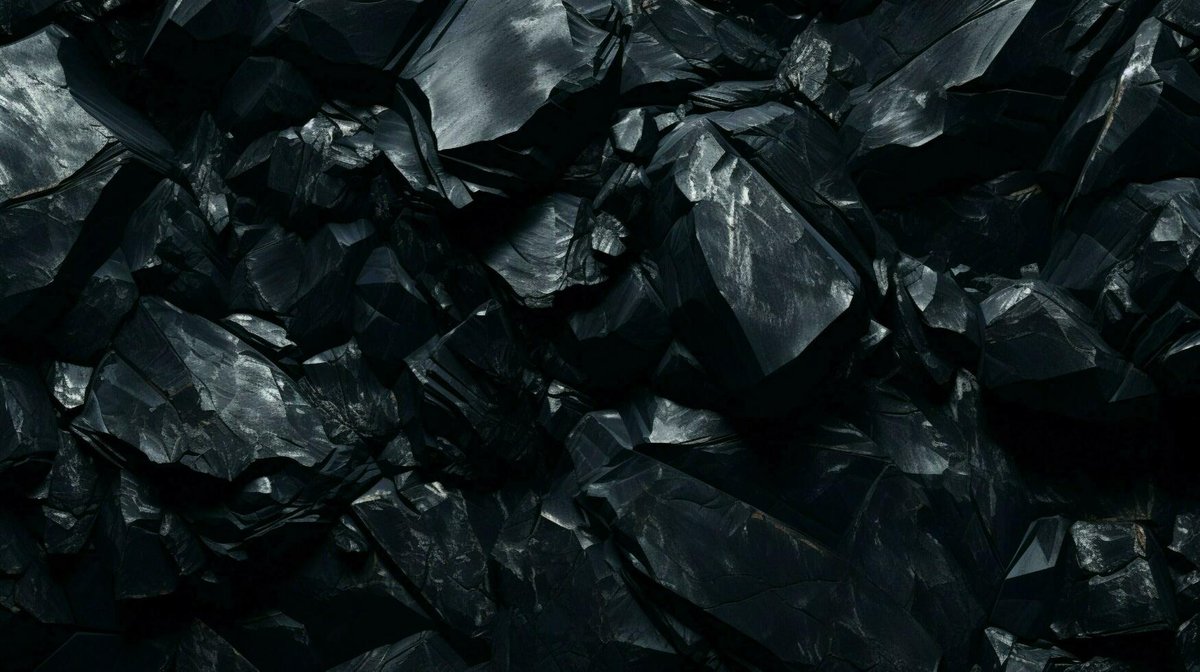
In the dynamic world of digital innovation, few terms spark as much curiosity and opportunity as "Generated Obsidian." Far from a mere digital replica of volcanic rock, this phrase has evolved to describe two distinct yet equally powerful applications of generative AI: one transforming how we design and visualize materials, and the other revolutionizing how we interact with and create knowledge. Both represent a leap forward in efficiency, creativity, and personalization.
Whether you're looking to imbue your architectural renders with the sleek, mysterious depth of real obsidian or empower your personal knowledge management system with an AI assistant that understands your thoughts, generated obsidian is shifting paradigms. It's about leveraging algorithms to create what was once painstakingly difficult or impossible, making the extraordinary accessible to everyone.
At a Glance: Unpacking Generated Obsidian
- Dual Meaning: "Generated Obsidian" refers both to AI-created digital material textures (like volcanic glass) and AI-powered content creation/querying within the Obsidian note-taking app.
- Digital Material Design: AI tools produce hyper-realistic, customizable obsidian textures for architecture, product design, and digital art, saving time and cost.
- Key Design Benefits: Rapid iteration, infinite variations, PBR map compatibility, real-time rendering, and unprecedented control over optical properties.
- AI for Knowledge Work: Integrating local Large Language Models (LLMs) into the Obsidian app for smart note generation, content summarization, and retrieval-augmented generation (RAG).
- Personalized Productivity: Leverage AI on your own device to query your personal knowledge base and generate context-aware content without relying on external cloud services.
- Future Forward: Both applications enhance creative flexibility and productivity, offering new avenues for designers, architects, and knowledge workers alike.
The New Frontier of Digital Design: AI-Generated Obsidian Textures
Imagine designing a building facade that shimmers with the iridescent, jet-black depth of volcanic glass, or prototyping a luxury gadget with a finish so realistic it feels tangible—all without the prohibitive costs, sourcing challenges, and environmental impact of natural materials. This is the promise of AI-generated obsidian in material design, a revolution poised to reshape industries from architecture to product visualization.
What is AI-Generated Obsidian in Design?
At its core, AI-generated obsidian refers to hyper-realistic digital textures and surface properties that mimic naturally occurring volcanic glass. Traditionally, capturing the unique beauty of obsidian—its deep black hue, reflective qualities, conchoidal fractures, and subtle iridescence—required complex photogrammetry, manual texturing, or expensive physical samples. Generative AI bypasses these hurdles, creating seamless, high-resolution visual assets that replicate obsidian's optical dance with light.
This digital alternative isn't just about static images; it’s about creating dynamic material definitions. These AI-driven tools understand how light interacts with the material, simulating refractions, reflections, and even subsurface scattering, bringing a profound level of realism to any digital rendering or virtual environment.
Why Digital Over Natural? The Obsidian Conundrum Solved
Natural obsidian, while breathtaking, presents significant practical challenges. Sourcing it from volcanic regions, then shaping, polishing, and integrating it into design projects, is both costly and time-consuming. Furthermore, the material's inherent properties, such as its brittleness and weight, limit its application. For designers and architects, these limitations often push obsidian out of reach for large-scale or consumer-facing projects.
AI-generated obsidian offers an elegant solution. It delivers:
- Cost-Effectiveness: Eliminate material acquisition, shipping, and labor costs associated with natural stone.
- Unconstrained Availability: Create infinite variations and quantities without depletion concerns.
- Design Flexibility: Easily customize every aspect—color, texture, reflectivity, fracture patterns—to perfectly match a vision.
- Sustainability: Reduces the need for mining and transportation, offering a more eco-conscious alternative for visualization and prototyping.
- Rapid Prototyping: Experiment with countless iterations in minutes, accelerating the design cycle.
It democratizes access to this luxury aesthetic, allowing creators to experiment freely without practical constraints.
Behind the Pixel Veil: How AI Crafts Digital Obsidian
The magic behind these lifelike textures lies in sophisticated AI models trained on vast datasets of spectral imaging and real-world material properties. Tools like Reelmind.ai leverage advanced techniques to synthesize truly convincing obsidian.
One key method involves neural radiance fields (NeRF), which allow the AI to learn how light behaves within a 3D space, capturing dynamic reflections and refractions with incredible accuracy. Coupled with diffusion models, the AI can generate novel, tileable obsidian patterns. These models understand the intrinsic qualities of the material, from the subtle light interaction with magnetite inclusions (simulating iridescence) to the characteristic conchoidal fracturing and varied mineral banding.
Designers gain granular control, able to customize parameters such as:
- Iridescence Intensity: Simulate the rainbow sheen often seen in natural obsidian.
- Fracture Density: Adjust the prevalence and appearance of characteristic breaks.
- Color Gradients: Introduce nuances like the rich reddish-brown of mahogany obsidian or the elusive rainbow variants.
- Opacity and Reflectivity: Fine-tune how much light passes through or bounces off the surface.
This procedural generation means every output is unique, yet grounded in the physical reality of obsidian, ready to be applied across diverse digital platforms.
From Concept to Creation: Real-World Use Cases in Design
The impact of AI-generated obsidian textures is already being felt across multiple design disciplines:
- Architectural Visualization: Imagine virtual building facades shimmering with obsidian panels, adapting to different lighting conditions in real time. Designers can experiment with how these surfaces impact urban landscapes, test various structural applications, and present hyper-realistic walkthroughs to clients.
- Product Prototyping: Luxury brands are digitally prototyping high-end electronics, automotive interiors, and fashion accessories with obsidian finishes. This allows for quick, cost-effective iteration on aesthetics before any physical manufacturing begins.
- Interior Design: Create opulent countertops, accent walls, or decorative panels in virtual environments, visualizing how the unique depth of obsidian enhances a space without committing to expensive materials.
- Digital Art & Gaming: Artists can quickly generate unique obsidian assets for sculptures, environments, and character designs, adding a layer of sophisticated realism. Game developers can enrich virtual worlds with stunning, dynamic surfaces that react realistically to in-game lighting.
- High-End Marketing & Advertising: Craft compelling visuals for product launches and ad campaigns, showcasing items with a luxurious obsidian finish that is indistinguishable from the real thing, enhancing perceived value and allure.
- Virtual Reality (VR) Environments: Immerse users in virtual spaces where obsidian-like materials bring a heightened sense of presence and tactile realism, whether for architectural tours or interactive art installations.
These applications demonstrate how digital obsidian removes barriers, allowing designers to push boundaries and bring visions to life with unprecedented fidelity and speed.
The Power in Your Hands: AI Tools and Workflows (e.g., Reelmind.ai)
Tools like Reelmind.ai are making the application of AI-generated obsidian incredibly intuitive, streamlining workflows for designers. The process is often driven by simple language, putting complex material generation at your fingertips.
- Rapid Iteration through Text Prompts: No more endlessly tweaking sliders. Imagine typing "glossy black obsidian with subtle gold veining" and instantly generating dozens of variants. This text-to-texture capability allows designers to rapidly explore diverse aesthetics.
- Fine-tuned Customization: Once a base variant is selected, precise control is available through sliders for reflectivity, roughness, subsurface scattering, and more. This blend of generative power and manual refinement ensures the final output perfectly matches the design intent.
- Community-Driven Innovation: Platforms often foster communities where users can share and access pre-trained models (e.g., a "Gothic Obsidian" texture pack). This collaborative environment further accelerates design and offers new creative inspirations, often with systems to reward creators for their contributions.
- Seamless Integration with Industry Standards: Generated obsidian textures aren't isolated; they’re designed to integrate into existing design pipelines. They can be exported as PBR (Physically Based Rendering) maps—standard texture sets that work across leading 3D software like Unity, Blender, and Unreal Engine. This ensures consistency and quality regardless of your chosen rendering engine. Furthermore, some platforms offer AI video generators for applying these textures to motion graphics, expanding their utility even further.
The ease of use and interoperability of these tools mean that the adoption of AI-generated obsidian is not just about novelty; it's about practical, everyday enhancement of the design process.
Expanding Your Digital Toolkit: Harnessing AI Within the Obsidian App
While one major "generated obsidian" revolutionizes material design, another quietly transforms personal knowledge management. Here, "Obsidian" refers not to volcanic glass, but to the popular markdown-based note-taking and knowledge management application. The "generated" aspect comes from integrating powerful AI—specifically Large Language Models (LLMs)—directly into your Obsidian vault, turning it into an intelligent assistant that helps you create, organize, and retrieve information with unparalleled efficiency.
Beyond Visuals: Generated Obsidian for Knowledge Work
Think of your Obsidian vault as your digital brain, a network of interconnected notes, ideas, and insights. Now imagine this brain having its own AI-powered assistant, capable of understanding context, generating new content, and surfacing relevant information on command. This is the essence of practical applications for generated obsidian in the context of personal knowledge management. It’s about leveraging generative AI to extend the capabilities of your notes, making your digital thoughts more dynamic and actionable. It's a significant upgrade from simply creating a Comprehensive Minecraft obsidian generator guide – here, the generation is intellectual, not material.
Supercharging Your Notes with Local LLMs
The real power here comes from running local Large Language Models (LLMs). Instead of sending your sensitive notes to a cloud-based AI, you can run powerful models directly on your own hardware, especially beneficial for those with RTX AI PCs leveraging NVIDIA's RTX-accelerated llama.cpp software library. This setup offers:
- Privacy and Security: Your data never leaves your device, providing peace of mind for sensitive information.
- Speed and Responsiveness: Local inference means minimal latency, offering near-instantaneous AI responses.
- Customization: The ability to choose and run specific LLM models that best suit your needs.
This integration transforms Obsidian from a static repository into an interactive, intelligent knowledge partner.
A Step-by-Step Guide: Connecting AI to Your Obsidian Vault
Getting your Obsidian app to talk to a local LLM might sound complex, but tools like LM Studio simplify the process. Here’s a streamlined approach:
- Set Up LM Studio:
- Download and install LM Studio, a user-friendly desktop application for running local LLMs.
- In LM Studio, click the "Developer" icon (often a gear or code symbol).
- Load your chosen LLM model (e.g., a Gemma 2 27B-parameter model). If you haven't downloaded one, LM Studio's interface makes it easy to browse and get started.
- Crucially, enable the CORS toggle (Cross-Origin Resource Sharing) to allow Obsidian to communicate with the local server.
- Click "Start" to run the local inference server.
- Note down the chat completion URL, which usually defaults to
http://localhost:1234/v1/chat/completions. This is how Obsidian will find your AI.
- Configure Obsidian Plug-ins:
- Open Obsidian and navigate to "Settings."
- Go to "Community plug-ins" and click "Browse" to open the community plug-in store.
- Search for essential LLM-related plug-ins. Two powerful options are Text Generator and Smart Connections. Install and enable both.
- Link Text Generator to LM Studio:
- In Obsidian's settings, find the "Text Generator" plug-in.
- Under "Provider profile," select "Custom."
- Paste the full
http://localhost:1234/v1/chat/completionsURL into the "Endpoint" field.
- Link Smart Connections to LM Studio:
- Find the "Smart Connections" plug-in in Obsidian's settings.
- For "Model Platform," select "Custom Local (OpenAI Format)."
- Enter the same
http://localhost:1234/v1/chat/completionsURL for the endpoint. - Provide the "Model Name" exactly as it appears in LM Studio (e.g.,
gemma-2-27b-instruct).
Once these steps are complete, your Obsidian plug-ins are ready to leverage the power of your local LLM, with LM Studio logging activity as your AI performs tasks.
Real-World Productivity Boosters
With AI integrated, your Obsidian workflow becomes significantly more potent, offering practical advantages for everyday tasks:
- Intelligent Note Generation with Text Generator:
- Imagine you're planning a hypothetical vacation to "Lunar City." You start a new note in Obsidian:
# Lunar City Vacation. - You add a prompt for your AI:
Generate a list of unique activities and dining experiences in Lunar City, focusing on sustainability and luxury. - Click the Text Generator plug-in icon. Obsidian sends your note and instructions to the local Gemma 2 27B model (accelerated by your RTX GPU via LM Studio).
- Almost instantly, your AI generates a detailed list within your note: "1. Zero-G Spa Retreats...", "2. Lunar Crater Fine Dining...", "3. Eco-Dome Botanical Gardens...". This jumpstarts your planning, offering creative ideas you might not have considered.
- Retrieval-Augmented Generation (RAG) with Smart Connections:
- Later, you might be researching local cuisines for "Lunar City" and recall you made notes about dining experiences during previous planning sessions.
- Open Smart Connections. Type a query like:
Show me past dining notes related to Lunar City, particularly sustainable options. - Smart Connections, using the same local LLM server, intelligently queries your entire Obsidian vault. It doesn't just do keyword matching; it understands the semantic meaning of your query.
- The plug-in then returns relevant snippets or links to your previous notes, allowing you to quickly retrieve context-aware information from your personal knowledge base. This is incredibly powerful for research, content creation, or simply remembering details from past projects.
These practical applications exemplify how generative AI within the Obsidian app enhances productivity, making your notes an active partner in your thinking process rather than just a storage archive.
Bridging the Worlds: Future Intersections and Considerations
We've explored "generated obsidian" in two distinct realms: as an advanced digital material for design and as an AI-powered assistant within a personal knowledge management system. While seemingly disparate, both applications represent the broader trend of generative AI empowering creators and thinkers, offering unprecedented control, efficiency, and creative freedom.
The Synergy of Digital Material and Intelligent Content
Could these two worlds converge? It's not hard to imagine. An architect designing a virtual building facade with AI-generated obsidian might use an AI-powered Obsidian vault to:
- Generate detailed design briefs based on project parameters and stylistic preferences.
- Query vast material libraries within their notes, asking the AI for comparisons of different "generated obsidian" variants against specific performance or aesthetic criteria.
- Draft marketing copy for their designs, incorporating descriptive language inspired by the visual properties of the generated material.
- Automate documentation for design choices, linking directly to the PBR maps of their chosen obsidian texture.
This synergy highlights the potential for AI to create a more holistic workflow, where design decisions and knowledge management are seamlessly interwoven.
Ethical Design and AI Transparency
As with any powerful technology, the practical applications for generated obsidian come with ethical considerations. In material design, questions of authenticity, potential misuse in misrepresenting products, and the environmental impact of compute power for AI models arise. For AI within knowledge management, concerns about data privacy (even with local LLMs), bias in AI-generated content, and over-reliance on AI for critical thinking need careful attention. Transparency in how AI models are trained, the data they use, and their inherent limitations will be crucial for responsible adoption.
Choosing Your Obsidian Path: What's Right for You?
Understanding the dual nature of "generated obsidian" is the first step. Your path will depend on your needs:
- Are you a designer, architect, artist, or product developer? Focus on the AI-generated material textures. Explore tools like Reelmind.ai, experiment with PBR maps, and leverage rapid iteration for stunning visuals.
- Are you a knowledge worker, researcher, student, or simply someone seeking to supercharge their personal information management? Delve into integrating local LLMs with the Obsidian app. Set up LM Studio, experiment with Text Generator and Smart Connections, and transform your note-taking into an AI-augmented thinking process.
Perhaps, like many innovators, you'll find value in exploring both, discovering new ways to connect the visual with the intellectual, the material with the informational.
Your Next Steps into the World of Generated Obsidian
The future of creation and knowledge is increasingly intertwined with generative AI. Whether you're captivated by the thought of crafting hyper-realistic digital materials or empowering your personal knowledge base with an intelligent assistant, the practical applications for generated obsidian offer compelling advantages.
Here's how you can dive deeper:
- For Digital Designers:
- Explore Generative AI Platforms: Research and experiment with tools specifically designed for AI texture generation. Many offer free trials or introductory tiers.
- Download PBR Maps: Look for community resources or generate your own obsidian PBR maps and integrate them into your preferred 3D rendering software (Blender, Unity, Unreal Engine).
- Start a Small Project: Apply a generated obsidian texture to a simple 3D model—a vase, a smartphone concept, or a small architectural element—to see its impact firsthand.
- For Knowledge Managers and Thinkers:
- Set Up LM Studio: If you have a compatible RTX PC, download LM Studio and get a local LLM running. It's a surprisingly straightforward process.
- Install Obsidian Plug-ins: Add Text Generator and Smart Connections to your Obsidian vault and connect them to your local LLM.
- Experiment with Prompts: Start with simple requests to generate ideas, summarize notes, or query your vault. The more you use it, the better you'll understand its capabilities and how to prompt it effectively.
The journey into generated obsidian is one of empowerment and efficiency. It’s about leveraging cutting-edge AI to create more, understand more, and design with unparalleled freedom. The tools are available, the knowledge is at your fingertips, and the only limit is your imagination.