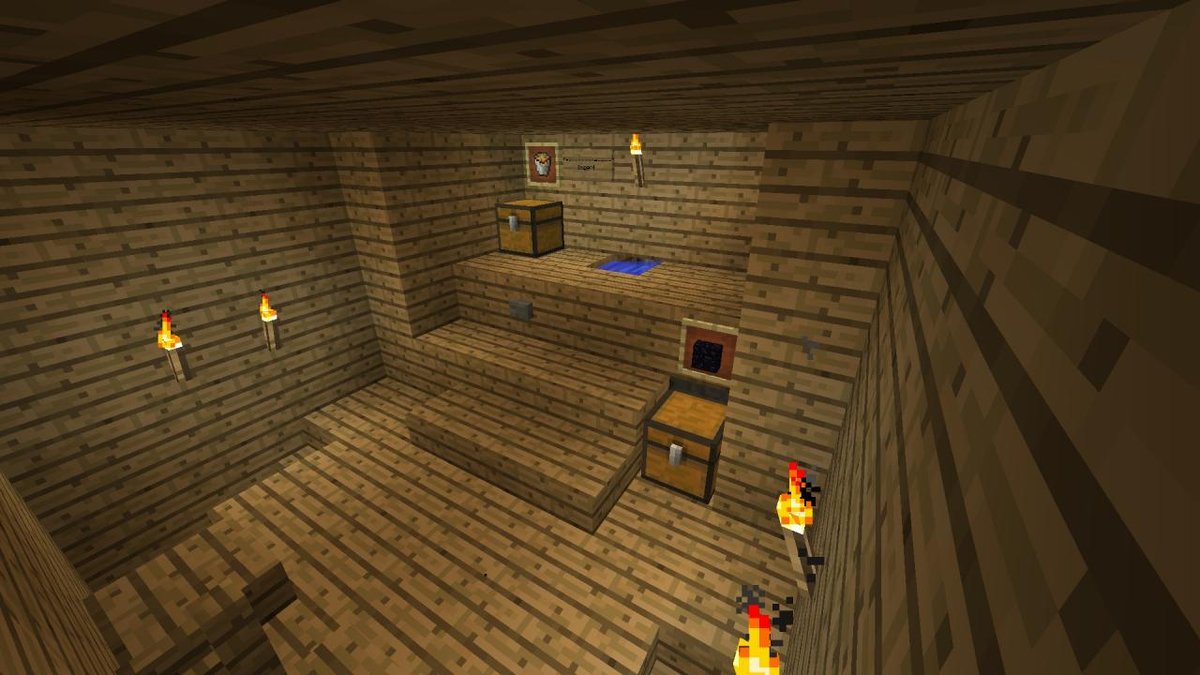
Welcome, fellow crafters and automation enthusiasts! If you've spent any time in Minecraft, you know obsidian is king. It's the sturdy backbone of your Nether portals, the dazzling core of your beacons, and a crucial ingredient for a host of powerful tools. But let's be honest, manually mining dozens of obsidian blocks, especially after dealing with ghasts and lava in the Nether, can be a grind. That's where Simple Automatic Obsidian Generator Designs come in, transforming a tedious chore into a seamless, resource-efficient operation.
Imagine a world where obsidian blocks practically materialize at your command, ready for pickup. No more deep dives into treacherous ravines or risky trips to the Nether just for a handful of blocks. This guide is your blueprint to that world, detailing designs that are not just effective but genuinely enjoyable to build and use. We're talking about automating one of Minecraft's most valuable resources, freeing you up for grander adventures and more ambitious builds.
At a Glance: Your Obsidian Automation Journey
- Why Automate? Say goodbye to manual mining hazards and hello to effortless obsidian production for Nether portals, beacons, and more.
- The Core Principle: Obsidian forms when flowing water meets a lava source block. All generator designs hinge on manipulating this interaction.
- Basic vs. Automatic: Start with understanding fundamental manual generators before moving to redstone-powered, piston-driven systems.
- Essential Materials: Fireproof blocks, water buckets, lava buckets, and redstone components (pistons, repeaters, levers) are your mainstays.
- Redstone & Pistons: Learn how these mechanics are the heart of any automatic system, controlling lava and water flow precisely.
- Key Design Considerations: Think about scalability, reset mechanisms, safety, and efficiency when choosing or adapting a design.
- Troubleshooting: Common issues often relate to lava/water flow, piston timing, or redstone wiring – we'll cover how to fix them.
The Obsidian Imperative: Why Automation is a Game-Changer
Obsidian is tough, beautiful, and incredibly useful. Its blast resistance makes it perfect for secure bases, and its distinct purple sheen adds a touch of mystique to any build. But its primary use often revolves around creating Nether portals – the gateway to an entirely new dimension filled with unique resources and challenges. Beyond that, a full beacon requires a staggering 164 obsidian blocks. That's a lot of manual labor, even with an efficiency V pickaxe.
Traditional obsidian generation usually involves pouring water over a lava pool, mining the resulting blocks, and repeating the process. While effective, it's slow, exposes you to lava hazards, and often requires a lot of back-and-forth. Automatic obsidian generators, however, leverage Minecraft's physics and redstone mechanics to produce obsidian with minimal player intervention. You press a button, pull a lever, and poof – obsidian appears, ready for collection. This shift from manual grind to automated efficiency isn't just a convenience; it's a fundamental upgrade to your Minecraft workflow, saving you hours and resources in the long run.
Understanding the Fundamentals: The Water-Lava Interaction
At its heart, any obsidian generator, whether manual or automatic, relies on one simple rule: when flowing water makes contact with a lava source block, it transforms that lava into obsidian. If flowing water meets flowing lava, it creates cobblestone or stone. The key distinction is "source block." This is crucial for all designs.
The Basic Manual Obsidian Generator: Your First Step
Before diving into complex automation, understanding a simple, repeatable manual design provides invaluable insight into the core mechanics. This setup, often used early in survival worlds, teaches you how to control water and lava to get obsidian consistently.
Materials You'll Need:
- 1 bucket of water (you'll need more water for each obsidian block you want to produce, but one source block is enough to get started).
- Approximately 50 fireproof blocks (stone, cobblestone, netherrack, bricks, etc.)
- At least 1 bucket of lava (again, more for more obsidian).
- A flat piece of land.
Construction Steps (Building for Six Obsidian):
- Prepare the Terrain: Find or create a flat area. This makes managing block placement much easier.
- The Water Holder: Start by digging a trench one block deep. This will be your water channel. For a six-block generator, a 1x3 trench should suffice for the water source, leading to the lava.
- The Lava Holder: Immediately adjacent to your water holder, dig another trench. This one needs to be two blocks deep. For six obsidian blocks, make this lava holder two blocks wide and three blocks long (so six individual block spaces for lava sources).
- Separation Wall: Create a single row of fireproof blocks separating your water holder from your lava holder. This is critical for controlling the flow.
- Level Difference: Here's a crucial detail: The lava holder must be one block lower than the water holder. This ensures that when the barrier is removed, the water flows down onto the lava.
- The Step: On the lava side of the separation wall, place a single block directly at the base of the wall, creating a "step" for the water to run over. This provides a stable point for the water to flow from the water holder to the lava area.
- Lava Placement: Place one bucket of lava into each of the six block spaces within your two-block-deep lava holder. Ensure they are all source blocks.
- Water Source: Place your bucket of water into the one-block-deep water holder. It should not flow anywhere yet.
How to Use (and Repeat): - Generate Obsidian: With your pickaxe, destroy one of the blocks separating the water holder from the "step" on the lava side.
- Observe the Magic: The water will immediately flow over the step and into the lava source blocks, converting all six lava blocks into obsidian!
- Mine and Reset: Mine the obsidian. To reset, rebuild the separating block, replace the lava source blocks, and you're ready to go again.
While simple, this manual design clearly illustrates the mechanics: controlled water flow interacting with lava source blocks. This is the foundation upon which all automatic designs are built, just like understanding basic crafting helps you appreciate more complex contraptions in Your Minecraft obsidian generator guide.
Stepping Up: Simple Automatic Obsidian Generator Designs
Now that we understand the core principle, let's explore designs that take automation seriously. These generators use redstone and pistons to manage the water and lava flow, producing obsidian with a flick of a switch.
Design 1: The Piston-Activated Cross Generator (Based on Planet Minecraft)
This design is a fantastic entry point into automatic obsidian generation. It's designed to produce multiple obsidian blocks (typically 12) with an easy reset mechanism. It relies on pistons pushing lava into contact with water, all controlled by a simple redstone circuit.
Materials You'll Need:
- Building Blocks: A significant stack of fireproof blocks (stone, cobblestone, smooth stone, etc.)
- Water Buckets: At least 4.
- Lava Buckets: At least 1.
- Redstone Components:
- Sticky Pistons: 4
- Redstone Dust: ~30-40 (depending on lead length)
- Redstone Repeaters: ~4-8 (for signal strength and timing)
- Lever: 1
Construction Steps:
- The Base Cross: Start by making a simple cross shape on the ground using your fireproof blocks. This isn't just decorative; it forms the central hub. Place one block in the middle, then extend three blocks out in each cardinal direction (North, South, East, West).
- Digging the Pits: Around this cross, you'll see four distinct 3x3 squares formed by the arms of the cross. Dig out these four 3x3 squares, going down one block deep. These are your water reservoirs.
- Edge Borders: Place fireproof blocks around the edges of each of these four 3x3 holes. Do not place blocks in the very center of the cross itself or in the internal corners of the 3x3 pits where the water will eventually meet.
- Central Water Blocks: In the middle of each of the four 3x3 holes you dug, place a single fireproof block. These blocks are crucial for creating infinite water sources and directing water flow.
- Water Placement: Put water on every side of each single block you just placed in the center of the 3x3 holes. This should create four infinite water sources, filling each 3x3 pit with water that flows towards the center of the pit.
- Water Border: Now, build a border of fireproof blocks around the entire water area, encompassing all four 3x3 pits. This will contain the water and prevent it from spilling out.
- The Center Block: Return to the very center of your original cross (the block where all the arms meet). Place a fireproof block directly on top of this center block. This is where your lava will sit.
- Piston Placement: Place four sticky pistons around this newly placed center block. Each piston should face inwards towards the center block and be one block away from it. When activated, they will push the lava block.
- Redstone Circuitry (Outer Ring): Lay down redstone dust in a square or circular pattern around the outside of these four pistons. This will be your main redstone line to activate them. Ensure the redstone connects to the back of each piston. You might need repeaters if your redstone line is long or if you need to adjust timing.
- Activation Lever: Extend the redstone wiring from this circular setup to one side of the machine. Attach a lever to the end of this redstone line. This will be your on/off switch.
- Initial Lava Placement (Pistons ON): Crucially, activate the lever so the pistons are extended. Then, place one bucket of lava directly on the center block where the pistons are pushing. The extended pistons will hold the lava in place, creating a lava source block surrounded by water sources (from the 3x3 pits). This is the moment of creation!
- Redstone for Obsidian Creation (Internal): Place redstone dust along the four slots of the machine where the pistons would push the lava block if they weren't extended. This redstone will allow the water to interact with the lava when the pistons retract.
How to Use/Reset:
- Activate: Hit the lever to activate the generator. If the pistons are set up correctly, they will push the lava block, causing it to interact with the surrounding water. Obsidian should form around the central block.
- Reset (the "Automatic" part):
- Hit the off switch (the lever) to retract the pistons. This stops the lava flow (or rather, pulls the lava block back).
- Mine the newly formed obsidian blocks.
- Replace any redstone dust that might have been destroyed by the lava (this is the slightly less "automatic" part of this specific design, as redstone can burn).
- Hit the switch again to re-extend the pistons and regenerate the obsidian.
This design is a stepping stone. While it still requires manual redstone replacement, it significantly reduces the effort compared to manually replacing lava buckets. The core concept of using pistons to move a lava source block into contact with water is central to many more advanced automatic designs.
Design 2: The Vertical Piston-Pushed Generator
Another simple yet effective approach involves using a single piston to push a lava source block vertically or horizontally into water, often paired with an observer for precise timing.
Basic Concept:
- Create a small chamber with a water source block at the bottom.
- Place a fireproof block above the water source.
- Place a sticky piston next to this fireproof block, facing the block.
- On top of the fireproof block, place a lava source.
- Activate the piston with a lever or button. The piston pushes the fireproof block (and the lava on it) into the water.
- Wait, this will create cobblestone if not timed right! The key here is not to push the lava block itself into the water, but to push a block underneath the lava, causing the lava to fall into the water source.
Refined Vertical Concept: - Dig a 1x1 hole one block deep. Place a water source at the bottom.
- Place a fireproof block above this water source (so there's an air gap between water and this block).
- Place a lava source on top of this fireproof block. The lava is now sitting over the water.
- Place a sticky piston horizontally, facing this fireproof block, one block away.
- When the piston pushes the fireproof block away, the lava above it will fall into the water source below, instantly turning into obsidian.
- A key challenge: The obsidian will form where the water source is. You need a way to mine that obsidian and then reset the lava. This is often achieved with another piston that pushes the formed obsidian away, making space for new obsidian.
This illustrates the range of simple automatic designs. The "automatic" part often refers to the controlled placement of lava/water, even if a manual reset is still required.
The Heart of Automation: Redstone and Piston Mechanics
To truly understand and build effective automatic obsidian generators, a grasp of basic redstone and piston mechanics is essential. These are the gears and levers of your Minecraft machinery.
Redstone Essentials:
- Redstone Dust: Carries a signal up to 15 blocks. Place it on blocks.
- Redstone Torch: A constant power source, or an inverter.
- Lever: A persistent on/off switch. Ideal for generators you want to leave running or easily activate.
- Button: A momentary pulse, useful for single-shot operations.
- Redstone Repeater: Extends redstone signals, prevents backfeeding, and introduces delays. Essential for timing lava and water flows.
- Redstone Comparator: Can subtract signals or detect container fullness, less common for simple generators but useful for advanced logic.
- Observer: Detects block changes (placement, destruction, state changes) directly in front of it and emits a short redstone pulse. Incredibly useful for reacting to obsidian formation or lava flow.
Piston Power:
- Piston: Pushes blocks directly in front of it when powered. It will not pull blocks back. Can push up to 12 blocks.
- Sticky Piston: Pushes blocks like a regular piston, but also pulls the block directly in front of it back when it retracts, provided the block isn't stuck to anything else. This is crucial for moving lava source blocks.
- Piston Direction: Always remember which way your piston is facing. A piston activates by extending one block.
- Blocks Pistons Can Push/Pull: Most solid blocks, including full lava and water source blocks (if they are a single block, not flowing liquid). They cannot push bedrock, obsidian (without glitches), or other unmovable blocks.
How Redstone and Pistons Combine:
In an obsidian generator, redstone powers pistons. These pistons then perform one of two key actions:
- Manipulating Lava: A sticky piston might push a lava source block into a designated area of water, or pull it back after obsidian forms.
- Manipulating Water: Less common for simple obsidian generation, but pistons can be used to open/close water channels.
- Pushing Obsidian: Once obsidian forms, a piston can push the newly created block out of the way, making space for the next block to generate. This is a crucial element for fully automatic, continuous generators.
Understanding how to time repeaters to ensure lava is placed before water, or vice-versa, or how to push formed obsidian blocks out of the way, is the key to mastering these designs. For further details on more advanced redstone circuits, you might find inspiration in various online communities and advanced redstone tutorials.
Designing for Success: Key Considerations & Best Practices
Building an automatic obsidian generator isn't just about following steps; it's about understanding the design principles that make them efficient, safe, and scalable.
1. Material Choices: Fireproof is Paramount
Always use fireproof blocks (cobblestone, stone, bricks, netherrack, basalt, etc.) for any structure that will be in direct contact with or adjacent to lava. Wood, wool, or other flammable materials will quickly ignite and burn, destroying your generator and potentially spreading lava.
2. Scalability: From Single Block to Mass Production
- Single-Block Generators: Ideal for personal use or when you only need a few obsidian blocks at a time. They are compact and easy to build.
- Multi-Block Generators: Like the cross generator, these produce several blocks simultaneously. They are larger but offer faster bursts of production.
- Continuous Production: For truly "automatic" (as in, no manual reset needed), you need a system that can produce, push, and reset without player intervention. This typically involves more complex redstone timing and multiple pistons to clear generated obsidian.
3. Reset Mechanisms: Manual vs. Automated
- Manual Reset: You intervene to replace lava, clear blocks, or re-arm pistons. Simpler to build, but still requires interaction. The cross generator with its redstone replacement is an example.
- Automated Reset: The generator handles the replacement of lava and clearing of blocks automatically. This is achieved with dispensers for lava, piston-fed storage for lava buckets, or complex clock circuits. This is where advanced redstone truly shines.
4. Safety First: Containing Lava
Lava is dangerous. Always build containment around your generator.
- Walls: Surround the entire apparatus with fireproof blocks, at least two blocks high.
- Floor: Ensure the ground beneath and around the lava interaction point is non-flammable.
- Testing: Test your generator in a safe, isolated environment before integrating it into a main base.
5. Efficiency and Speed: Maximizing Output
- Production Rate: How many obsidian blocks per minute/hour? Faster designs often require more complex redstone.
- Resource Use (Redstone): Simpler designs use less redstone. More complex, faster, or fully automatic designs will consume more. Consider your available resources.
- Collection System: For truly automatic generators, consider integrating hoppers and chests to collect the mined obsidian automatically. This adds another layer of convenience.
6. Compactness and Aesthetics
While not strictly functional, a compact and aesthetically pleasing generator can be a source of pride. Advanced builders often strive to make their machines as small and hidden as possible, while still being functional. This often means more intricate redstone layouts.
Troubleshooting Common Issues
Even simple automatic obsidian generators can sometimes be finicky. Here are some common problems and how to diagnose them:
- Lava Not Turning into Obsidian:
- Is it a Source Block? Remember, only lava source blocks turn into obsidian when touched by flowing water. If you're dealing with flowing lava (e.g., from a lava pool), it will produce stone or cobblestone. Ensure your design provides a lava source.
- Water Flowing Incorrectly: Is the water flowing onto the lava source, or is the lava flowing into the water? The former produces obsidian. Check your water sources and flow paths.
- Timing Issues: In more complex designs, if the water appears after the lava has started flowing (not as a source block), you might get stone. Redstone repeaters are key to precise timing.
- Water Not Flowing Correctly (or at all):
- Source Block Present? Make sure you have a water source block where it's supposed to be. If it's just flowing water, it might run out.
- Obstructions: Are there any blocks blocking the water's path?
- Gravity: Water flows downwards and outwards. Ensure your design accounts for this natural flow.
- Redstone Malfunctions:
- Signal Strength: Redstone dust only carries a signal for 15 blocks. If your line is longer, you need repeaters.
- Proper Connections: Ensure redstone dust is directly connected to the component it's meant to power (e.g., the back of a piston, or into a block next to a component).
- Power Source: Is your lever/button properly connected and activated? Is it providing enough power?
- Overlapping Signals: Make sure redstone lines aren't interfering with each other unless intended.
- Pistons Not Pushing/Pulling:
- Powered? Check if the piston is receiving a redstone signal.
- Sticky vs. Regular: Are you using a sticky piston where you need to pull a block back?
- Unmovable Block: Is the piston trying to push an unmovable block like obsidian or bedrock?
- Max Push Limit: Pistons can push up to 12 blocks. If you're trying to push more, it won't work.
- Lava Burning Redstone:
- Placement: Lava sources can burn out redstone dust and other components. Place redstone in non-flammable tunnels or behind protective blocks to shield it from lava. This is a common issue with the Planet Minecraft design's reset step.
Patience is key in troubleshooting. Go through your design block by block, tracing the redstone signal and observing the water and lava flow. Even experienced builders often spend more time debugging than building complex redstone contraptions, similar to how fine-tuning any automated system requires careful inspection and adjustment.
Advancing Your Automation: Beyond the Simple Designs
Once you've mastered the basic and simple automatic designs, a whole new world of possibilities opens up. These advanced concepts push the boundaries of what's considered "simple" but leverage the same fundamental principles:
- Fully Automatic Generators with Item Collection: These designs incorporate a separate piston to break the obsidian block, and hoppers and chests to collect it. This means you can walk away and return to a full inventory of obsidian.
- Dispenser-Based Lava Management: Instead of manually replacing lava or using sticky pistons to move source blocks, dispensers can be loaded with lava buckets and triggered by redstone to place lava precisely. This is ideal for truly continuous operation.
- Observer-Detected Production: Observers can detect when an obsidian block forms, then trigger a piston to push it, or a redstone signal to reset the lava/water cycle. This creates a highly responsive, event-driven system.
- Stackable Designs: More complex generators can be designed to be stackable, allowing you to build multiple layers on top of each other for incredibly high production rates in a compact footprint.
- Integrated Mining Systems: Some ambitious builders integrate their obsidian generators directly with automatically mining systems (like TNT dupers, though this can be risky and laggy) or even more refined piston-based mining.
While these go beyond "simple," they illustrate the potential. Your initial simple automatic obsidian generator is a foundational step, teaching you the mechanics you'll need to tackle these grander projects. The journey from a single manual block to a fully automated obsidian factory is one of the most rewarding aspects of Minecraft engineering.
Your Next Obsidian Project: Build and Conquer!
You've explored the fundamentals of obsidian generation, understood basic manual setups, and delved into the intricacies of simple automatic designs. You now have the knowledge to move beyond risky manual mining and embrace the efficiency of automation.
Whether you choose to build a compact, single-block piston generator for occasional use or embark on the more ambitious cross-design for a steady supply of resources, the principles remain the same: controlled interaction between water and lava, orchestrated by the magic of redstone and pistons.
Don't be afraid to experiment! Minecraft's sandbox nature encourages creative problem-solving. Start with a basic design, get it working, and then think about how you can optimize it. Can you make it faster? More compact? Fully automatic? Can you integrate it into your existing base? The most satisfying builds are often those you tweak and perfect yourself.
So grab your pickaxe, gather your redstone, and start building. The Nether portals aren't going to build themselves, but with your new automatic obsidian generator, they'll be a whole lot easier to power! Happy crafting!